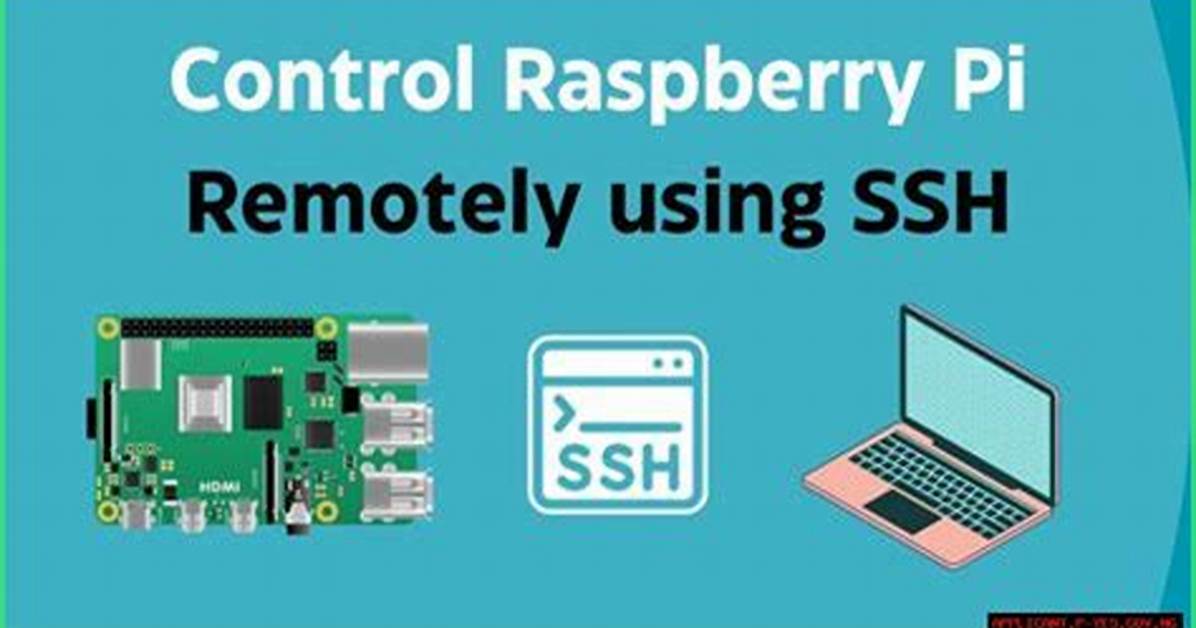
SSH remote IoT Raspberry Pi is a powerful tool that allows users to securely access and control their IoT devices remotely. In today's connected world, this capability is essential for managing networks and automating tasks efficiently. Whether you're a hobbyist or a professional, understanding how to set up and use SSH for Raspberry Pi IoT projects can significantly enhance your productivity.
SSH, or Secure Shell, provides encrypted communication between your computer and a remote server or device. When it comes to IoT applications, SSH ensures that your data remains secure while enabling seamless remote access. This guide will walk you through the process of setting up SSH on a Raspberry Pi for IoT purposes, complete with practical examples and best practices.
By the end of this article, you'll have a solid understanding of how SSH works in the context of IoT, how to configure it on a Raspberry Pi, and how to leverage its capabilities for your projects. Let's dive in!
Introduction to SSH
SSH (Secure Shell) is a network protocol designed to provide secure communication over an unsecured network. It encrypts all data transmitted between two devices, ensuring privacy and integrity. For IoT applications, SSH is particularly valuable because it allows users to remotely manage and interact with IoT devices without compromising security.
The protocol supports various authentication methods, including password-based and public-key authentication, making it versatile for different use cases. By using SSH, users can execute commands, transfer files, and manage configurations on remote devices safely and efficiently.
SSH is widely adopted across industries due to its robust security features and ease of use. It serves as the backbone for many remote administration tasks, especially in the realm of IoT, where devices are often deployed in remote or inaccessible locations.
Raspberry Pi Overview
The Raspberry Pi is a series of small single-board computers developed by the Raspberry Pi Foundation. It is widely used in educational settings, hobbyist projects, and even professional environments due to its affordability and versatility. Equipped with a variety of interfaces and expandable capabilities, the Raspberry Pi is an excellent platform for IoT applications.
One of the standout features of the Raspberry Pi is its compatibility with Linux-based operating systems, such as Raspbian. This compatibility allows users to leverage a wide range of software tools and libraries for developing and deploying IoT solutions. Additionally, its GPIO (General Purpose Input/Output) pins enable direct interaction with sensors, actuators, and other peripherals.
When combined with SSH, the Raspberry Pi becomes a powerful tool for managing IoT devices remotely. Its compact size, low power consumption, and extensive community support make it an ideal choice for IoT enthusiasts and professionals alike.

