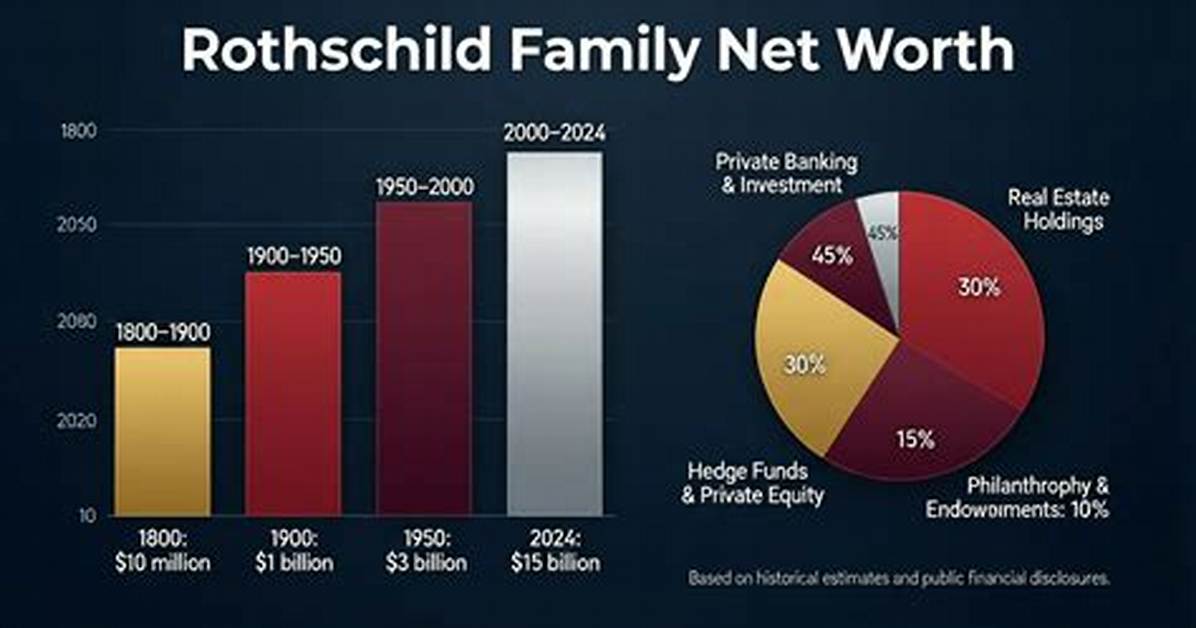
The Rothschild family is synonymous with immense wealth and influence, making the topic of Rothschild net worth a subject of fascination for many. With a legacy that spans over two centuries, the family's financial empire has evolved through banking, investments, and an array of diverse business ventures. Understanding their net worth is not just about numbers; it's about unraveling the story of a dynasty that has shaped financial systems and economies across the globe.
In this article, we will explore the intricacies of Rothschild net worth, delving into their historical background, key investments, and the factors that contribute to their financial standing today. We aim to provide a comprehensive overview that not only highlights their wealth but also addresses the myths and realities surrounding the family's financial prowess.
As we navigate through the layers of the Rothschild legacy, you will discover insights into their philanthropic efforts, business acumen, and how they have maintained their wealth through generations. This in-depth analysis will equip you with a deeper understanding of one of the most intriguing families in history.
1. The History of the Rothschild Family
The Rothschild family's ascent to prominence began in the late 18th century, with Mayer Amschel Rothschild establishing a banking business in Frankfurt, Germany. His success laid the foundation for what would become one of the most powerful banking dynasties in Europe.
The family's wealth grew exponentially, particularly during the Napoleonic Wars, when they financed various governments and undertook significant investments. By the 19th century, the Rothschilds had established branches in major European cities, including London, Paris, Vienna, and Naples, solidifying their status as financial titans.
2. Early Years and Banking Origins
Mayer Amschel Rothschild, born in 1744, was a court factor to the German nobility, which provided him with essential connections. He had five sons, each of whom was sent to different cities to establish banking branches:
- Salomon Rothschild in Vienna
- Nathan Mayer Rothschild in London
- Karl Mayer Rothschild in Naples
- James Mayer Rothschild in Paris
- Adolph Mayer Rothschild in Frankfurt
This strategic distribution allowed the family to dominate the European banking market, with each branch specializing in different financial services and investments.

